Your happiest customers are already recommending you to friends. They're telling coworkers about your service. They're posting about your product.
This word-of-mouth happens organically, and it's incredibly valuable. People trust recommendations from friends way more than they trust advertising.
Referral marketing is systematizing this.
If you’ve ever recommended a restaurant to a friend, shared a discount code, or signed up for a service because someone you trust suggested it, you’ve experienced referral marketing in action.
Instead of hoping customers randomly recommend you, you're actively encouraging and rewarding those recommendations.
You make it easy for customers to refer others, give them reasons to do it, and track the results.
But despite how natural referrals feel, most brands completely ignore them, despite referrals being some of their highest-quality leads.
Other businesses struggle to turn word-of-mouth into a structured, repeatable growth system.
That’s where a well-built referral marketing strategy comes in.
For Canadian businesses, especially those competing in crowded markets, referrals are one of the most authentic and cost-effective ways to grow.
We've helped businesses build referral programs that turned existing customers into consistent lead generation machines.
The difference between hoping for referrals and actively driving them is night and day. Let's talk about what actually works.

What Is Referral Marketing
Referral marketing is deliberately encouraging your customers to recommend your business to others, usually with incentives or rewards for successful referrals.
It's structured word-of-mouth. Instead of it happening randomly, you're creating systems and incentives that make referrals happen more often.
The basic step-by-step process is: a customer loves your product. You ask them to refer friends. You give them an easy way to share. When a friend becomes a customer, the original customer gets a reward.
Referral marketing works because people trust recommendations from people they know.
Someone saying ‘I use this and it's great’ about your product carries more weight than any ad you could run. That trust shortens sales cycles and improves conversion rates dramatically.
How Does Referral Marketing Work in Practice?
Identify Your “Referral-Ready” Customers
You identify customers likely to refer, usually your happiest customers.
Not every customer is ready to refer. Referral-ready customers share at least two traits:
- They had a positive, memorable experience.
- They understand your value deeply enough to explain it to others.
- You can identify them using post-purchase surveys, customer satisfaction data, or email engagement patterns.
Choose an Incentive That Matches Your Brand
You give these customers tools, making referrals easy. Examples:
- Product-based businesses: credits, free products, upgrades.
- Service-based businesses: discounts, bonus sessions, added services.
- Subscription companies: free months, early access.
- Local businesses: gift cards, loyalty points.
Streamline the Sharing Process
Track everything so you can reward successful referrals properly. Make it easy for customers to share through:
- Referral links
- Pre-written messages
- One-click social sharing
- QR codes
Referral marketing is different from affiliate marketing, where strangers promote you for commission. Referral marketing specifically leverages existing customer relationships.
The referrer actually uses and loves your product; they're genuine advocates, not just marketers.
It's also different from viral marketing, which hopes content spreads organically. Referral marketing is a structured program with clear mechanics, tracking, and rewards. You're not hoping something goes viral; you're systematically encouraging referrals.
Why Referral Marketing Beats Other Lead Sources
Referral customers convert better. They arrive with built-in trust from someone they know. That recommendation pre-sells them on your value.
Conversion rates from referrals often run 2 to 5x higher than cold traffic.
They cost less to acquire. You're paying referral rewards, but usually way less than acquiring customers through ads or other paid channels. If you're paying $100 to acquire customers through ads, but only $30 in referral rewards, that's significant savings.
Referral customers stick around longer. They were recommended by someone they trust, so expectations are set properly. They're less likely to churn because they came in understanding what you offer. Higher retention translates to higher lifetime value.
They refer to others, too. Customers acquired through referrals are more likely to refer others themselves.
This creates a compounding effect where your best customers generate more customers who generate more customers. That chain is incredibly valuable once it gets spinning.
Referral marketing scales with your customer base. As you grow customers, your referral capacity grows. Unlike ads, where costs often rise with scale, referrals get easier as you have more people who could potentially refer.
The quality tends to be higher. Referred customers already fit your ideal profile because existing customers referred someone they think would benefit. This natural filtering means better fit, fewer problem customers, and higher satisfaction.
How Referral Programs Fit into Inbound Marketing
Referral marketing isn’t separate from your broader marketing strategy and concepts; it actually extends and strengthens them.
Inbound marketing is attracting customers through valuable content and experiences rather than interrupting them with ads.
Referrals fit perfectly because referred customers are coming to you based on a trusted recommendation, not being pushed toward you through advertising.
Referrals amplify your inbound efforts. You create great content, customers find value, and they tell friends. This organic sharing is inbound marketing working.
Referral programs just add structure and incentive to what's already happening naturally.
Customers won't refer to you if they're not delighted by your product. Great product, excellent service, and valuable content create satisfaction that makes people want to refer. Referral programs provide mechanisms, but customer satisfaction provides motivation.
Most inbound strategies focus on attracting strangers. Referral marketing activates your existing customers as a growth channel.
It's leveraging the end of the customer journey (happy customers) to fuel the beginning (attracting new prospects). This closes the loop, making the inbound strategy more complete.
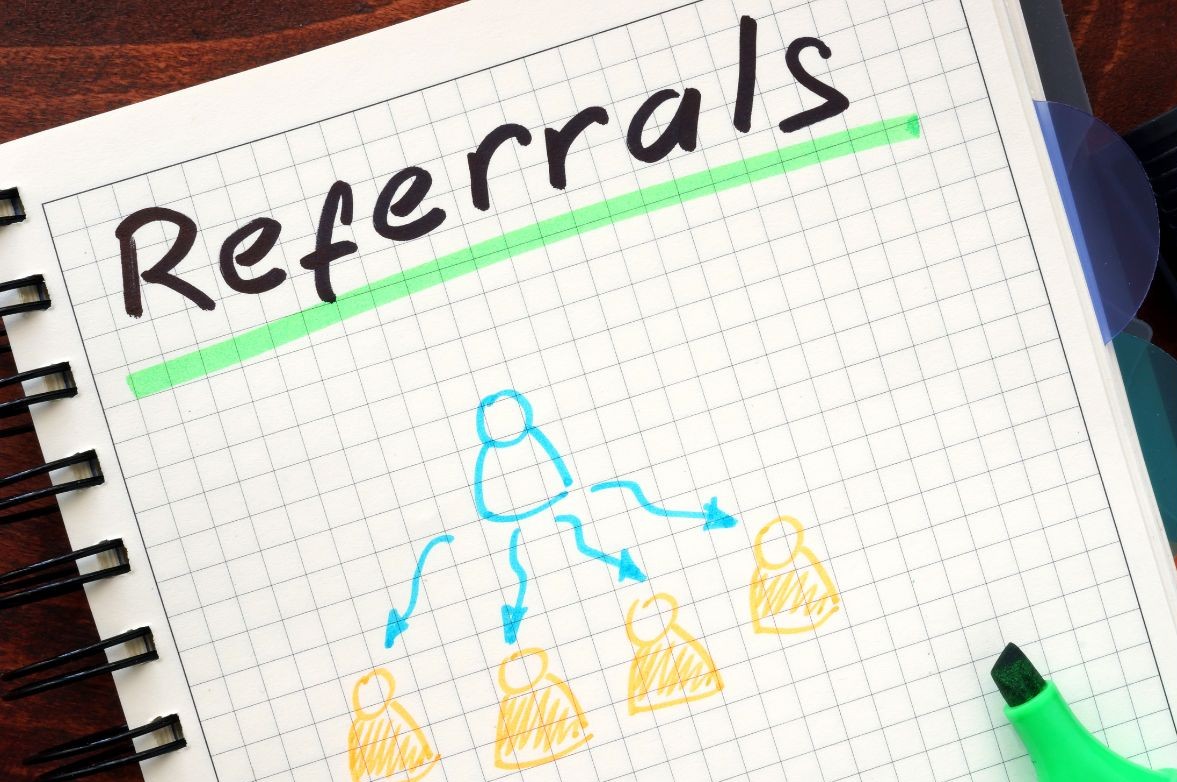
How to Set Up a Referral Program That Works
Start by identifying whom to target for referrals. Not every customer will refer. Focus on your happiest customers. They can be people giving five-star reviews, using your product extensively, and engaging regularly.
These are your potential advocates. Don't blast referral requests to everyone; target people most likely to actually refer.
Make referrals simple. Friction kills referral programs. If referring someone requires five steps, form-filling, and complicated instructions, nobody will do it. One-click sharing, pre-written messages they can customize, and automatic tracking remove every possible obstacle.
Create compelling incentives for both parties. Referrers should get meaningful rewards, including discounts, credit, cash, or something they actually value. Referred friends should get something too, like a welcome discount, a bonus, and a trial extension. Double-sided incentives improve conversion on both ends.
Choose rewards matching your economics. If customer lifetime value is $1,000 and acquisition cost through ads is $200, you can profitably offer $50 to $100 in referral rewards. Meaningful rewards drive more referrals, but make sure math works for your business.
Build easy sharing tools. Email templates, social share buttons, and personalized referral links give people multiple ways to share depending on how they prefer communicating. Some people text, some email, and some post on social media. Support all channels.
Track everything properly. You need to know who referred whom, when the referral was converted, and whether rewards were delivered. Without proper tracking, the program falls apart. Use referral software or build tracking into your system.
Communicate clearly about how the program works. What do they get? When do they get it? How many people can they refer to? What counts as a successful referral? Confusion kills participation. Crystal clear rules and benefits maximize uptake.
Automate reward delivery. Manual processing of referral rewards doesn't scale and creates delays. Automatic credit, discount codes, and payment should happen automatically when a referral converts.
How to Create a Referral Link That Converts
Referral links are personal URLs uniquely tied to each customer.
When someone clicks their link and converts, the system knows who to credit for the referral. How to create a referral link properly makes the difference between tracking working and falling apart.
Use URL parameters or unique codes. Something like yoursite.com?ref=CUSTOMER123 or yoursite.com/refer/CUSTOMER123. The specific structure matters less than ensuring each link is unique and trackable.
Make links short and clean. Long, complicated URLs look spammy and don't get shared. Use a URL shortener or create clean referral slugs. yoursite.com/r/john looks way better than yoursite.com/referralpage?customerid=48572&tracking=yes&source=email.
Most referral software generates these automatically. You don't usually need to build from scratch. These tools handle link generation, tracking, and rewards.
Test links thoroughly before launching. Click your own referral link, complete signup, make sure tracking fires, and verify reward triggers. Nothing worse than launching a program only to discover tracking broke and you can't credit referrals.
Make links shareable across channels. The same link should work whether shared via email, text, social, or anywhere. Some platforms create channel-specific links, but the most effective approach is one link that works everywhere.
Consider vanity URLs for top referrers. If someone's referring to lots of people, giving them a clean branded link (yoursite.com/janes-picks) makes sharing easier and looks more professional than a generic referral code.
Just Launch Something

The biggest mistake with referral marketing is overthinking it. Companies spend months designing perfect programs that never launch. Meanwhile, their customers would have happily referred to people if anyone had just asked them.
Start simple. Email your best customers. Create basic tracking. Launch it and see what happens.
You'll learn more from one month of running an imperfect program than from six months of planning a perfect one.
Customer feedback will tell you what rewards motivate them, what messaging resonates, and what friction exists. Then improve based on actual data.
We believe your happiest customers are already your best sales team.
Referral marketing just gives them tools, incentives, and recognition for what many would do anyway. Reach out to our experts if you need help setting up a referral program for your business.