Most marketers remember the moment they realized that increasing traffic wasn’t enough.
You can invest in SEO, run ads, publish content, or pour time into social media, but if those visitors don’t convert, the growth you’re chasing simply never materializes.
That’s when the real value of CRO becomes clear.
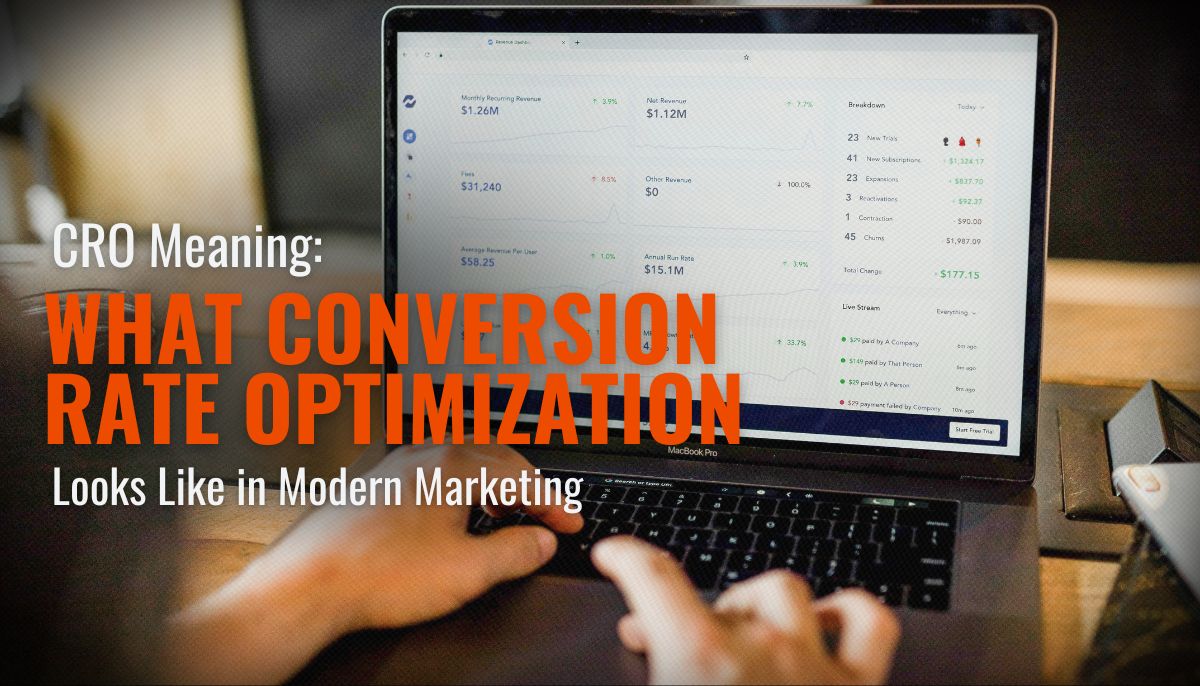
In marketing, CRO refers to Conversion Rate Optimization, the disciplined process of improving how effectively your website, landing pages, or funnels turn visitors into leads, buyers, or repeat customers.
To us, CRO is the same as the moment a business stops guessing and starts learning. It’s not just optimization; it’s observation, testing, and using data to refine what already exists.
Today, CRO has become one of the most essential levers for businesses in Canada that want to grow without increasing ad spend.
This guide breaks down what CRO really means, how it works, why it matters, and how you can build a sustainable process that moves your bottom line.
What Does CRO Stand For?
CRO stands for Conversion Rate Optimization.
Pretty straightforward. But the meaning of CRO goes deeper than just the acronym.
It's about systematically increasing the percentage of website visitors who complete whatever action matters for your business, be it purchases, signups, downloads, demo requests, or anything else.
CRO works best when supported by solid marketing strategy & concepts that guide how your audience thinks, behaves, and converts.
The core idea of CRO is to get more value from the traffic you already have instead of just spending more money bringing in new visitors. Like fixing a leaky bucket before pouring more water in. Makes more sense when you think about it that way.
Most businesses obsess over traffic. More ads. More SEO. More social posts. But if your conversion rate sits at 1% while your competitors’ is at 3%, they're getting triple your results from identical visitor numbers.
That's a huge competitive gap, and throwing more traffic at it just makes the problem more expensive.
What Is CRO in Marketing Beyond the Definition
So, what is CRO in marketing beyond that basic explanation? Part science, part psychology, part data detective work.
You're trying to figure out why people aren't converting, then fixing those friction points one by one.
Conversion optimization isn't about tricks. It's about removing obstacles between visitors and whatever action you want them to take.
Sometimes that means redesigning a confusing checkout. Sometimes it's rewriting a copy that doesn't address real customer concerns. Sometimes it's literally just making your call-to-action button easier to see.
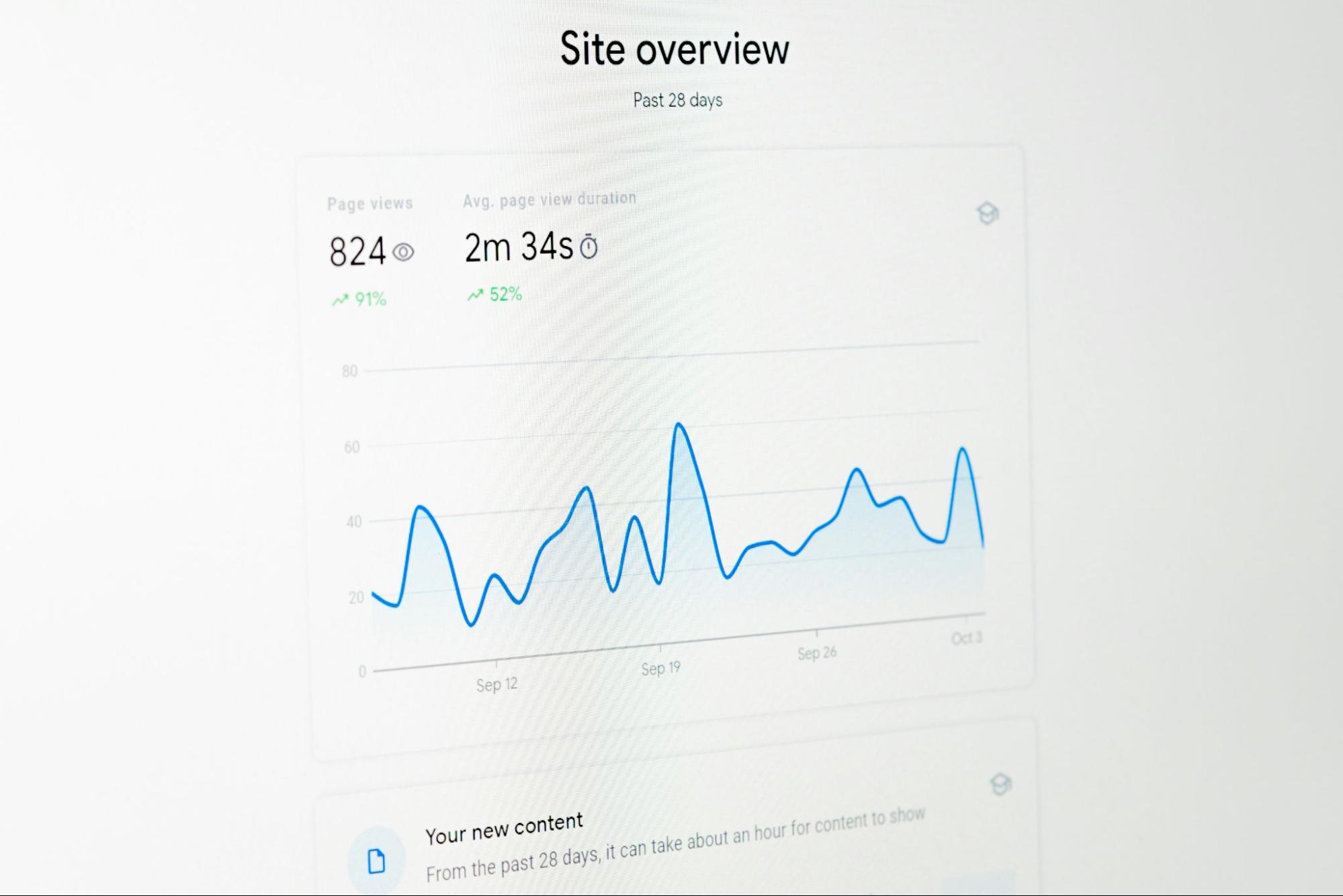
The whole process runs on data. Which pages do people abandon? Where do they hesitate? What messages work? Where do they get lost? You're not guessing; you're testing, measuring, learning, and improving based on how users actually behave.
Why CRO Matters So Much Right Now
Here's what businesses often miss: small conversion rate improvements create massive revenue changes.
That's why smart marketers focus on conversion rate optimization before scaling budgets.
Conversion optimization has become one of the most strategic investments for brands in Canada due to the following reasons:
It’s more cost-efficient than increasing traffic.
If you double your conversion rate, you double your revenue.
Converting at 2% and you improve to 3%? That's a 50% increase in conversions. Same traffic. Same ad spends.
Do the math for your situation. Ten thousand monthly visitors at 2% conversion gives you 200 conversions. Increase to 3% and suddenly you're at 300.
If the average customer value is $500, you just added $50,000 monthly revenue without spending another dollar on acquisition.
It gives you clarity on your audience.
CRO turns user behaviour into insights you can actually act on.
Before optimizing conversions, you need a clear view of your digital customer journey, because every drop-off point reveals where users hesitate or lose trust
It compounds over time.
Every improvement builds on the last, whether it is optimizing your copy, making the layout friendly, or changing the design of your checkout page.
It touches every part of your marketing ecosystem.
From email to search to ads, optimized conversions lift performance across all channels.

What Are the Steps of Conversion Optimization?
Every effective CRO program follows a similar structure. Here's what actually happens when you do this properly.
Audit and Assess
Data collection comes first. Can't improve what you don't measure.
Set up proper analytics. Understand current conversion rates at different funnel stages. Identify where people drop off. Google Analytics is a baseline. Heatmaps help. Session recordings show what people actually do versus what you assume they do.
This step eliminates guesswork.
Create Hypotheses
CRO is scientific. You define what you think will improve conversions and why.
For example: “Reducing the form from six fields to three will increase lead submissions because users feel less overwhelmed.”
This clarity ensures every change has a purpose.
Not random changes. Not ‘this would look better.’ Create a hypothesis based on actual research.
For example: ‘Users abandon at checkout because shipping costs surprise them at the last step. Showing estimated shipping earlier and conversion rate should improve; it is a testable one.
Implement and Test
Run proper tests. A/B testing is standard.
Instead of making sweeping changes, CRO uses controlled experiments like A/B tests to validate ideas.
Show version A to half your traffic, version B to the other half, and measure which wins. You’re not improving based on opinions; you’re improving based on real user behaviour.
But you need enough traffic for statistical significance. Don't call a test after two days because version B is winning. Run it until you have real data.
Analyze and Adapt
Find something that works? Make it permanent.
Then move to the next test. Conversion optimization isn't a project you finish. It's ongoing. There's always another element to test, another friction point to smooth out.
If a variation wins, you roll it out. If not, you learn and test again.
This cycle repeats continuously, turning small improvements into major long-term gains.
How to Optimize Conversion Rate Without Big Budgets
You don't need expensive tools or dedicated teams to start conversion rate optimization.
You need discipline and the willingness to test methodically. Here's the approach for businesses with limited resources.
Work on high-traffic pages first. Homepage, main product pages, checkout flow, or wherever your most visitors land. Improving conversion on a page getting 10,000 monthly visitors beats optimizing something getting 100 visitors.
Fix obvious problems first. Before sophisticated tests, remove clear obstacles like slow page loads. broken links, confusing navigation, forms asking for unnecessary info, or CTAs that don't stand out.
Many conversion issues begin with unclear messaging or scattered content, which is why a strong content map plays a pivotal role in shaping high-performing pages.
Start with free or cheap tools. Google Analytics costs nothing. Hotjar's basic plan is affordable. You can run basic A/B tests through free tools before buying enterprise software. Start simple, prove value, and invest in better tools later.
Test things that matter. Button color tests make good case studies, but rarely move needles significantly. Test value propositions. Test different offers. Test pricing presentation. Test how you address objections. Test page structure and info hierarchy.
Don't test everything at once. Multivariate testing sounds sophisticated, but it needs massive traffic for meaningful results. For most businesses, simple A/B tests work better. Change one significant element, measure impact, and learn from it.
Where CRO Fits with Everything Else
Conversion rate optimization doesn't exist by itself. Works alongside other marketing efforts and actually amplifies them.
Think about it: SEO and content bring organic traffic. Paid ads bring targeted visitors. Social media builds awareness. But CRO makes sure those efforts generate actual business results instead of just vanity metrics.
Businesses seeing the best results treat CRO as foundational, not supplementary. They don't wait for massive traffic before optimizing. They build optimization thinking into everything from the start.
Also worth noting: conversion optimization improves ad efficiency. Platforms like Google Ads and Facebook reward good conversion rates with lower costs per click and better placement. When landing pages convert better, ads become more cost-effective. That compounds over time.
Getting Started with Your CRO Program

Understanding CRO meaning in marketing is one thing. Actually, implementing it? Different story. Most businesses know they should be doing this, but struggle with where to begin.
The real challenge with conversion optimization isn't the tactics. It's building organizational commitment to continuous testing.
Many businesses run a few tests, see some results, then stop. Or they test randomly without a clear roadmap.
Companies doing CRO well treat it like infrastructure, not a campaign.
We’ve helped businesses and seen firsthand how small refinements unlock major results. And the best part? You don’t need more traffic to win. You just need a smarter, more intentional approach to the traffic you already have.